Short answer
A padel court is a bolted steel structure, so it can be dismantled and moved. For temporary sites, the Prism Pano on a raised platform base needs no concrete slab, which makes it suitable for events, short leases and sites where you cannot pour concrete. Truly mobile courts on trailers exist but are niche. For more than a season of play, a permanent installation gives the best play and the lowest cost per hour.
Three kinds of “portable” court
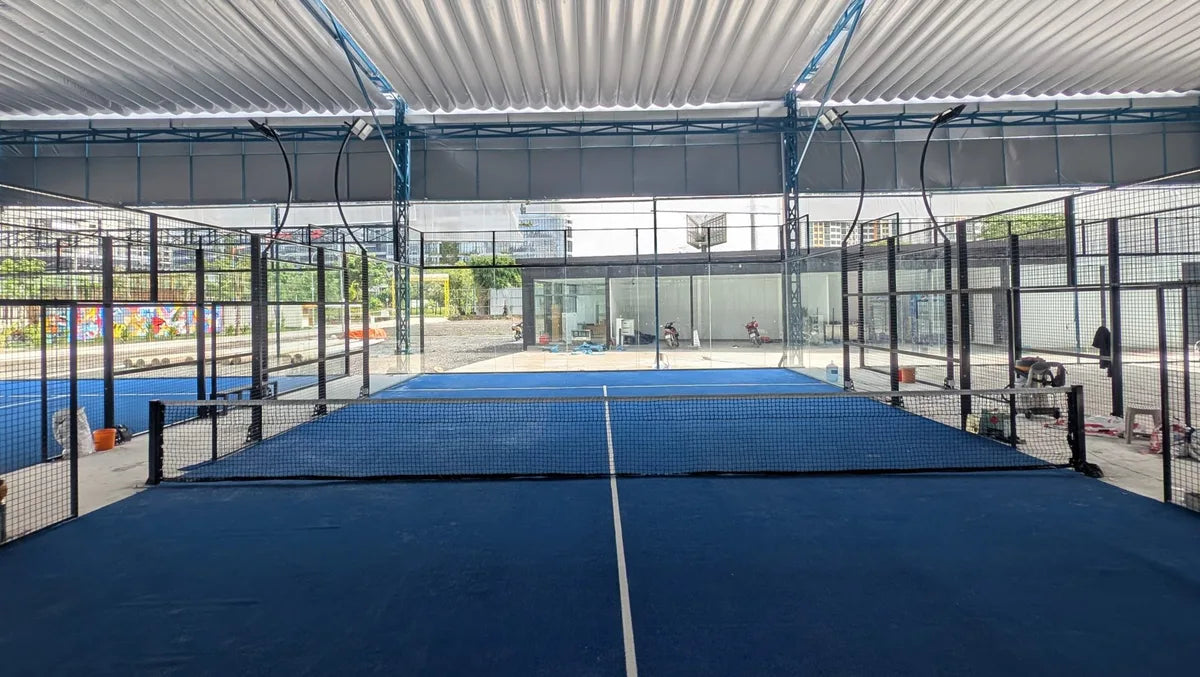
- Relocatable courts: a normal court bolted to a base, dismantled and moved when needed. Every Prism court can be moved by a crew.
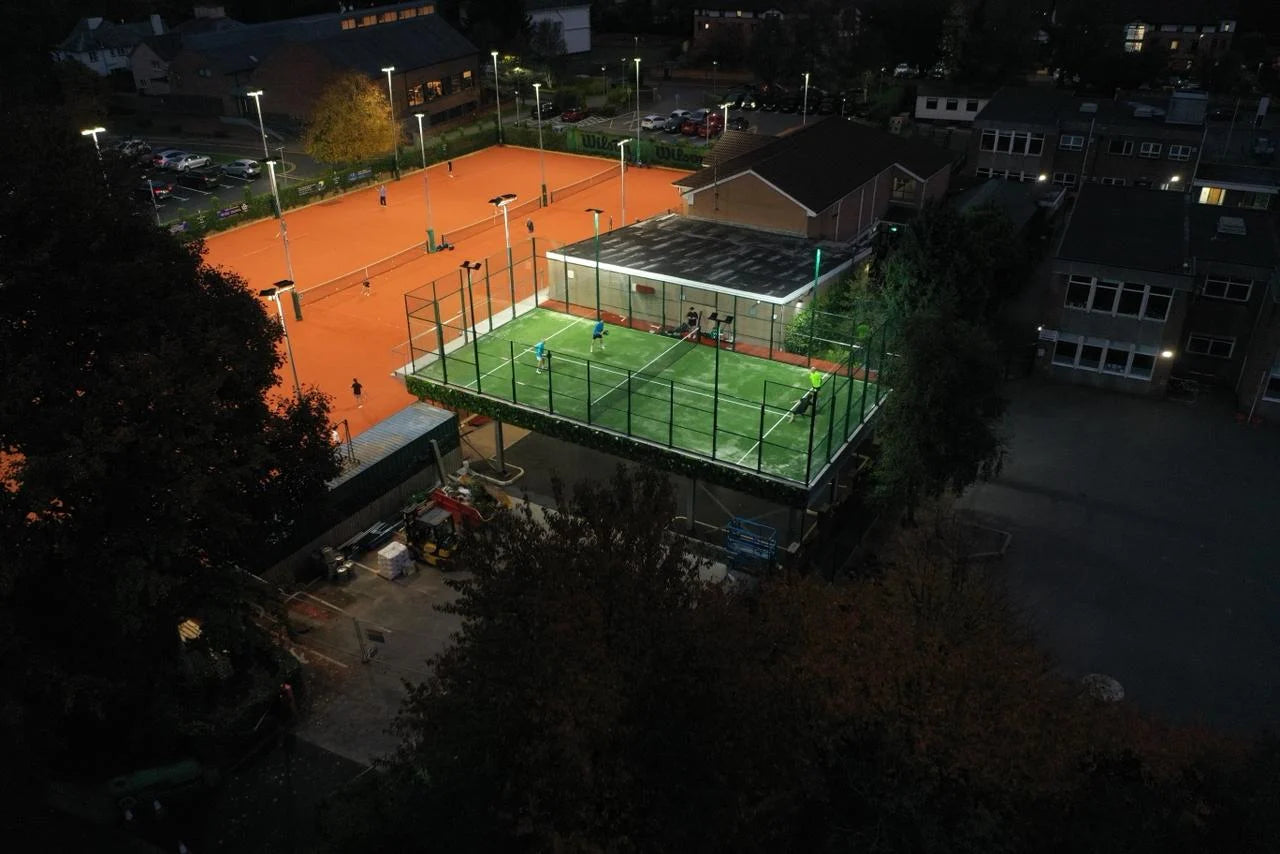
- Courts on a raised platform base: no slab, the base spreads the load and levels up to 1 m of slope. Good for short leases, events and sensitive ground.
- Mobile courts: courts on trailers or ballast systems for one-day events. Niche and expensive per use.
Building without a slab
The Prism Pano can stand on a raised platform base instead of a concrete slab. It suits beaches, gardens, rooftops with suitable structure, landlord sites where concrete is not allowed, and pop-up clubs testing a new market. See raised and elevated padel courts.
For events and activations
Brands and venues use temporary courts for tournaments and launches. Plan for installation and removal days, a level area, power for lights and security for the glass overnight.
When to choose a permanent court instead
For a club open for years, a permanent installation on a slab gives the stiffest base, the most consistent bounce and the lowest cost per playing hour. Moving a court costs crew time and freight each time.
Get a fixed, itemised quoteSend us your site and number of courts. You get a layout, a timeline and a price, usually within 48 hours.
Get a quote
Prism Padel project team. We design, ship and install padel courts from Bangkok, Hong Kong, Stockholm and Oslo, with projects in the UK, Thailand, Singapore, Malaysia, Indonesia, Vietnam and Tanzania. Prices in this article are our list prices and estimates as of 9 November 2026.