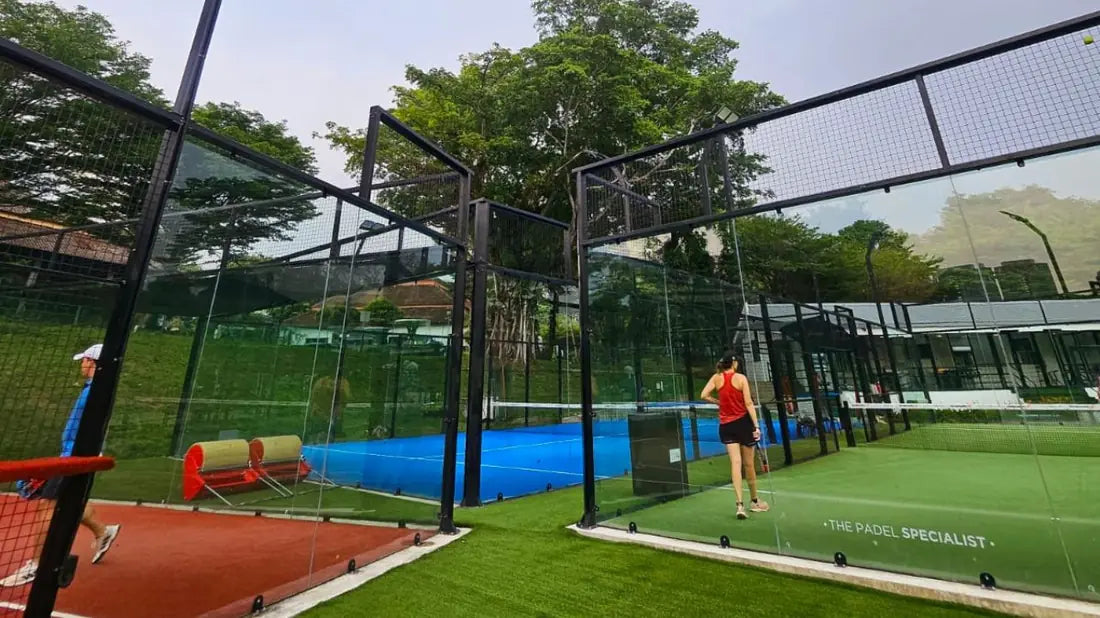
Short answer
A padel club can be very profitable because each court is rented by the hour to four players and costs relatively little to build. Profit depends on three numbers: court-hour price, occupancy and rent. UK clubs average about 85% occupancy according to the 2026 Playtomic Global Padel Report, and the best clubs earn up to five times more booking revenue per court than the weakest. Courts from Prism cost about US$27,660 each delivered and installed, so the building and rent usually matter more than the courts.
How a padel club makes money
Revenue comes from four sources: court bookings, coaching and academies, memberships and leagues, and food, drink and retail. Bookings are the core. Nine out of ten top clubs in the Playtomic report also sell off-court services, which lifts revenue per visit.
The court-hour maths
Use this formula and put in your own market’s numbers:
Yearly booking revenue = courts × bookable hours per day × 365 × occupancy × price per court-hour
Worked example (example inputs, not a forecast)
| Input | Example |
|---|---|
| Courts | 4 |
| Bookable hours per day | 15 |
| Occupancy across all hours | 55% |
| Price per court-hour | 40 |
| Booking revenue per year | 4 × 15 × 365 × 0.55 × 40 = 481,800 |
The currency is whatever you charge in. Peak hours sell out first, so model peak and off-peak separately when you can.
The cost side
Investment
- Courts: about US$27,660 per court for a Prism Pano in a 4-court order, delivered and installed.
- Slab: about US$7,000 per court as our estimate.
- Building or roof: the largest variable, from zero outdoors to the biggest line in the budget for a new hall.
- Fit-out: reception, changing rooms, café, booking system.
Running costs
- Rent or financing of the building
- Staff and coaches
- Electricity for lighting and climate
- Booking platform fees
- Maintenance: brushing, sand top-ups and eventually new turf
Payback
Courts are a small part of the total investment, so payback depends mostly on rent and fit-out. Outdoor clubs on owned land pay back fastest. Indoor clubs in expensive cities need high occupancy at peak and strong off-peak programmes. Build your model with conservative occupancy in year one and let it grow.
What the best clubs do differently
- Location: within a short drive of many players, with parking.
- Enough courts: four or more, so groups, coaching and leagues can run at the same time.
- Great courts and light: panoramic glass and even, glare-free lighting make players come back.
- Programmes off-peak: beginner classes, women’s leagues, corporate events and juniors fill the quiet hours.
- Social space: a café or bar keeps players on site.
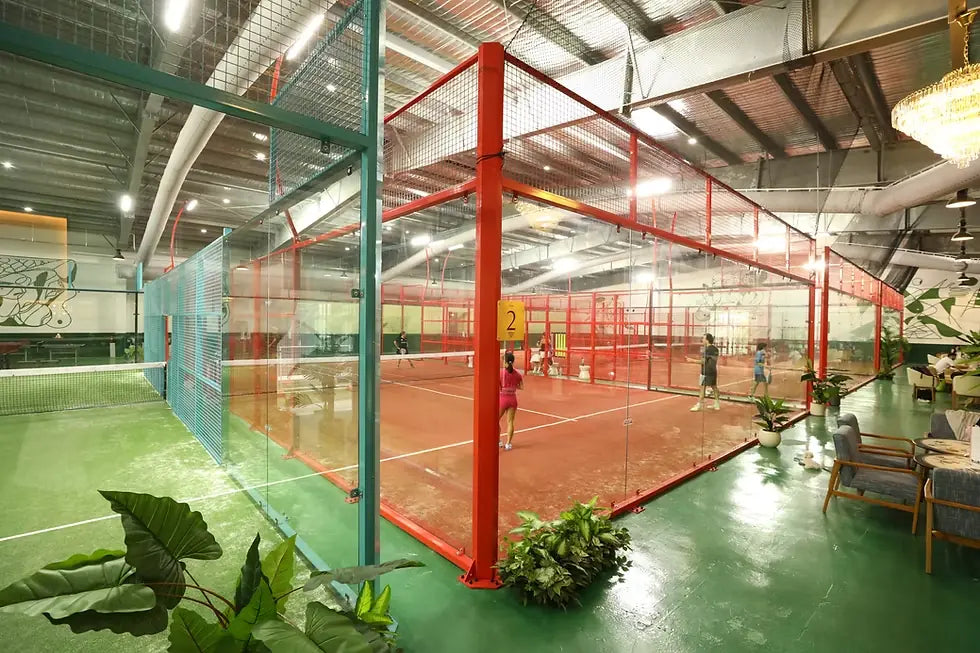
See how we help padel club investors with layouts and business cases, and read how to write a padel club business plan.
Get a fixed, itemised quoteSend us your site and number of courts. You get a layout, a timeline and a price, usually within 48 hours.
Get a quote
Felix Kaldal, Founder and CEO, Prism Padel. We design, ship and install padel courts from Bangkok, Hong Kong, Stockholm and Oslo, with projects in the UK, Thailand, Singapore, Malaysia, Indonesia, Vietnam and Tanzania. Prices in this article are our list prices and estimates as of 9 November 2026.